 ilmeaalim
News

Crypto commentator Pumpius has published a message he says he received privately, claiming an attempt was made to pay him to post negative statements about Ripple and XRP on X. According to Pumpius, the proposal offered 25,000 USDT in exchange for publishing a post containing specific claims criticizing Ripple, XRP, and certain influencers. In the message shared by Pumpius, the sender allegedly outlined several required talking points. These included tagging Ripple in a post, describing the project as a scam, claiming the commentator had sold all XRP holdings, and blaming Ripple and influencers for what was described as “wealth destruction.” The message also stated that the post could be written “in your own words” as long as those points were included. The proposal reportedly included payment terms showing half of the funds upfront and the remaining amount after the post was published. Pumpius shared a screenshot of the message as part of his public statement. I just received a private message offering me $25,000 to defame Ripple and XRP. A paid script telling me exactly what to say. Call it a scam. Claim I sold everything. Blame Ripple and influencers for wealth destruction. Let that sink in. So ask yourself this. Who is funding… pic.twitter.com/wNvY7mCQCF — Pumpius (@pumpius) February 6, 2026 Pumpius Rejects the Offer In his post, Pumpius stated that he refused the proposal and rather chose to make the communication public. He wrote that he had “just received a private message offering me $25,000 to defame Ripple and XRP,” adding that the instructions appeared to be part of a coordinated messaging effort. Pumpius encouraged readers to consider who might be funding such campaigns and who might benefit from negative narratives about XRP. He suggested that some social media criticism directed at Ripple may not be organic, but instead part of paid promotional activity designed to influence public perception. He also stated that financial incentives can be used to shape online narratives and claimed the existence of organized attempts to influence conversations in the digital asset space. Pumpius concluded his post by emphasizing that he would not accept payment to publish such claims and that he intended to expose similar offers if they appear. Dominic Kwok Responds to the Claim Dominic Kwok, co-founder of EasyA, replied publicly to Pumpius’ post, saying he had received reports of similar proposals. Kwok wrote that “many people have dm’d me with similar offers, in many cases even more money.” He added that he believes there is “a serious, concerted effort by the anti-XRP lobby to discredit XRP.” Kwok’s response supported Pumpius’ claim that coordinated campaigns may exist within online crypto communities. He encouraged the XRP community to remain focused on their goals and not be influenced by external pressure. We are on X, follow us to connect with us :- @TimesTabloid1 — TimesTabloid (@TimesTabloid1) June 15, 2025 Concerns About Narrative Manipulation in Crypto The incident described by Pumpius highlights ongoing concerns within the cryptocurrency industry about paid promotion, misinformation, and coordinated messaging campaigns on social media platforms. While marketing and sponsored content are common across digital industries, undisclosed payments tied to specific claims or accusations raise questions about transparency and credibility. Pumpius’ decision to publish the alleged message reflects a growing trend among commentators who choose to disclose private offers they consider inappropriate. At the time of writing, the identity of the sender of the alleged offer has not been confirmed, and no independent verification of the claim has been publicly presented. Disclaimer : This content is meant to inform and should not be considered financial advice. The views expressed in this article may include the author’s personal opinions and do not represent Times Tabloid’s opinion. Readers are advised to conduct thorough research before making any investment decisions. Any action taken by the reader is strictly at their own risk. Times Tabloid is not responsible for any financial losses. Follow us on X , Facebook , Telegram , and Google News The post Pundit Receives Private Message Offering $25,000 to Defame Ripple and XRP appeared first on Times Tabloid .

Bitcoin's price dropped sharply from $80,000 to $60,000 in early February. Despite losses, various investor groups began buying, shifting the market dynamics. Continue Reading: Bitcoin Rally: Investors Drive a Remarkable Turnaround The post Bitcoin Rally: Investors Drive a Remarkable Turnaround appeared first on COINTURK NEWS .

Bitcoin is in a bear market and is “getting swept up” with the rest of the macro assets, Bitwise CEO Hunter Horsley declared during a television interview.

BitcoinWorld Bitcoin Soars: Pioneering Cryptocurrency Surpasses $70,000 Milestone in Major Rally In a landmark moment for digital assets, Bitcoin (BTC) has decisively broken the $70,000 barrier, trading at $70,058.2 on the Binance USDT market as of March 2025. This surge represents a critical psychological and technical threshold for the world’s premier cryptocurrency, reigniting discussions about its long-term trajectory and role in the global financial system. Consequently, analysts are scrutinizing the confluence of factors driving this rally, from institutional adoption to macroeconomic trends. Bitcoin Price Breaches a Critical Resistance Level According to data from Bitcoin World market monitoring, the BTC/USDT trading pair on Binance confirmed the breakthrough early Tuesday. This price action follows weeks of consolidation below the previous all-time high. The move above $70,000 is not merely a numerical milestone; it signifies a robust recovery of market confidence. Furthermore, this price level had previously acted as a formidable resistance point, making its breach a technically significant event. Trading volume spiked by approximately 35% during the ascent, indicating strong buyer participation. Market structure analysis reveals key support and resistance zones. The table below outlines recent critical levels: Price Level Significance $73,800 Previous All-Time High (Nov 2024) $70,000 Current Breakout & Psychological Barrier $65,200 Recent Strong Support Zone $60,000 Major Institutional Buy Zone (Q4 2024) Several immediate catalysts contributed to this upward movement. Firstly, renewed filings for spot Bitcoin Exchange-Traded Funds (ETFs) by major asset managers have bolstered institutional sentiment. Secondly, on-chain data shows a decrease in exchange reserves, suggesting a trend toward accumulation rather than selling. Finally, broader macroeconomic conditions, including currency devaluation concerns in several emerging markets, have increased demand for perceived stores of value. Analyzing the Drivers Behind the Cryptocurrency Rally The rally extends beyond simple speculation. A deeper examination reveals foundational shifts in the digital asset landscape. Institutional capital flows have become a dominant narrative. Since the regulatory approval of spot Bitcoin ETFs in key jurisdictions, weekly inflows have consistently exceeded $1.5 billion. This institutional embrace provides a more stable demand base compared to previous retail-driven cycles. Moreover, the integration of blockchain technology by traditional finance (TradFi) firms for settlement and custody has legitimized the asset class. Network fundamentals also support the price appreciation. The Bitcoin hash rate, a measure of computational power securing the network, continues to hit record highs. This indicates massive infrastructure investment and reinforces network security. Simultaneously, the adoption of layer-2 solutions like the Lightning Network has facilitated faster and cheaper transactions, enhancing Bitcoin’s utility for everyday payments. These technological advancements address previous criticisms about scalability and efficiency. Expert Perspectives on Sustainable Growth Financial analysts and blockchain researchers point to a maturation in market dynamics. “The breach of $70,000 is significant, but the underlying story is about diversification,” notes a report from the Cambridge Centre for Alternative Finance. They observe that Bitcoin’s correlation with traditional risk assets like tech stocks has decreased over the past quarter. This decoupling suggests investors are beginning to treat Bitcoin as a distinct asset class with unique value propositions, such as censorship resistance and a verifiably scarce supply. Regulatory clarity in major economies has also played a pivotal role. Clearer frameworks for cryptocurrency custody, taxation, and trading have reduced uncertainty for large-scale investors. For instance, the European Union’s Markets in Crypto-Assets (MiCA) regulation, now fully implemented, provides a comprehensive rulebook for service providers. This regulatory progress reduces systemic risk and fosters a more professional market environment. Consequently, corporate treasury allocations to Bitcoin have seen a measurable uptick, as evidenced by public filings from several NASDAQ-listed companies. The Historical Context and Future Market Trajectory To understand the present, one must consider Bitcoin’s past cycles. Each major bull market has been characterized by a new wave of adoption. The 2017 cycle was driven by retail speculation and Initial Coin Offerings (ICOs). The 2021 cycle saw the rise of decentralized finance (DeFi) and non-fungible tokens (NFTs). The current cycle appears heavily influenced by institutional portfolio allocation and the global macroeconomic climate. Inflation hedging remains a primary use case cited by long-term holders, especially in regions with volatile national currencies. Looking forward, several factors will influence whether this price level sustains. Key considerations include: Macroeconomic Policy: Central bank interest rate decisions and quantitative tightening measures. Regulatory Developments: Ongoing legislative efforts in the United States and Asia-Pacific regions. Technological Innovation: Progress on upgrades like Taproot and further Lightning Network adoption. Market Liquidity: Depth of order books and the health of major trading venues. Potential headwinds exist, of course. Regulatory crackdowns in specific jurisdictions could create short-term volatility. Additionally, the energy debate surrounding Bitcoin mining continues, though the network’s shift toward renewable energy sources—now estimated above 60%—is mitigating environmental concerns. Market participants also monitor the actions of long-term holders; a significant increase in spending by these entities could signal a local market top. Conclusion Bitcoin’s ascent above $70,000 marks a definitive chapter in its evolution from a niche digital experiment to a mainstream financial asset. This Bitcoin price milestone reflects a complex interplay of institutional adoption, technological resilience, and shifting global macroeconomic sentiment. While volatility remains an inherent feature, the market structure demonstrates increasing maturity and depth. The breakthrough serves as a powerful testament to the growing integration of cryptocurrency within the broader economic framework, setting the stage for the next phase of digital finance. FAQs Q1: What does Bitcoin trading above $70,000 mean for the average investor? It primarily signals strong market confidence and could attract more institutional investment, potentially increasing mainstream acceptance and stability over the long term. However, it does not guarantee short-term gains and underscores the importance of understanding the asset’s volatility. Q2: How does the current rally compare to Bitcoin’s previous all-time high in 2024? The current rally appears to be supported by stronger fundamentals, including sustained institutional ETF inflows and clearer regulations. Trading volume and network security metrics are significantly higher now, suggesting a more robust foundation than during previous peaks. Q3: What are the main risks associated with Bitcoin at this price level? Key risks include increased regulatory scrutiny in certain countries, potential macroeconomic shifts that affect all risk assets, technological vulnerabilities (though rare), and the possibility of a major sell-off by long-term holders taking profits. Q4: Does this price increase affect Bitcoin’s utility for transactions? Not directly. The Bitcoin network’s transaction capacity and cost are governed by block space demand and layer-2 solutions like the Lightning Network, not the USD price of one bitcoin. High value per coin can actually incentivize better network security. Q5: Where can investors find reliable, real-time data on Bitcoin’s price and network health? Reputable sources include aggregated data from multiple exchanges on sites like CoinMarketCap or CoinGecko, on-chain analytics from Glassnode or CryptoQuant, and official metrics from the Bitcoin network itself, such as blockchain explorers. This post Bitcoin Soars: Pioneering Cryptocurrency Surpasses $70,000 Milestone in Major Rally first appeared on BitcoinWorld .

The digital currency sector is heading towards a significant period of mergers and acquisitions, according to Tom Farley, who leads Bullish and previously ran the New York Stock Exchange. Speaking on CNB C Fr iday, Farley sai d to o many crypto firms are discovering a hard truth: what they built is a product, not a real business. Farley knows something about industry shakeups. During his time running the NYSE until 2018, he watched the exchange business go through massive consolidation. Now he thinks something is similar is going to happen. “The same thing is going to happen starting right now in crypto,” he told the network. Market downturn exposes weak business models The recent market downturn is exposing weak business models. Bitcoin has fallen roughly 45% from its peak of $126,100 in October and was trading at $69,405 when Farley gave his interview . He sai d th e price drop is washing away the “false optimism” that let weak companie s su rvive with inflated price tags. While people often panic during these corrections, Farley believe s th is is actually when the best long-term choices get made. The problem, according to Farley, is that this cleanup should have started much earlier. “It should have happened a year or two ago,” he explained. Companies kept hoping they could still fetch the kind of valuations seen in 2020, even when their numbers didn’t support it. He gave an example of firms bringing in just $10 million in revenue with no growth who still wanted $200 million to sell. “That dream is going to be over,” Farley said. “People are going to realize they don’t have businesses, they have products, and they need to merge up, and they need to scale, and that is going to happen. ” Institutional approach replaces speculative era According to Farley, the industry is moving away from “chasing frog coins and 100x leverage” and toward “on-chain” finance. The fundamental premise is that significant financial assets will eventually be transferred to public blockchains. Because they are looking five to ten years ahead and are not responding to daily movements, large institutional players continue to be engaged despite dramatic price changes. The process of consolidation will not be simple. Larger initiatives will acquire smaller ones, typically resulting in internal reorganizations and job losses. The businesses that come out of this phase, however, need to be more equipped to handle the high trading volumes that institutions demand and adhere to stringent regulatory requirements. Farley said that surviving companies need to stop being just “features” and become “institutional, compliant, and respected.” The difference between having a speculative product and running a sustainable business will determine who gets bought and who does the buying. There are sign s th e underlying technology has staying power. Even traditional firms like the NYSE have shown interest in putting stocks on blockchain systems, which Farley sees as proof that the technology works even if individual projects fail. This institutional endorsement suggests that while individual tokens may fluctuate, the infrastructure itself is becoming an undeniable fixture of modern global finance. The current market is acting like a filter . As investors become pickier about where they pu t mo ney, only companies that can prove they are built for the long haul will attract buyers or survive on their own. The result will likely be a crypto industry that looks more like traditional finance, with a handful of large, heavily regulated companies providing most of the infrastructure. For firms that can adapt and grow during this transition, the consolidation wave offers a chance to become legitimate long-term players in what Farley sees as an increasingly professional global market. The wild west days appear to be ending, replaced by a more mature phase where size, compliance, and institutional backing matter more than hype. Get seen where it counts. Advertise in Cryptopolitan Research and reach crypto’s sharpest investors and builders.

Polymarket’s parent company has submitted multiple trademark applications for “POLY,” indicating a strategic move toward launching a native cryptocurrency token for its prediction market platform. The filings represent a significant potential expansion of the company’s business model, exploring new monetization strategies amid the evolving cryptocurrency landscape. The trademark applications come at a critical time for

The digital asset market is moving into a phase where utility matters more than hype. Investors are increasingly looking for projects with value and solid technology, rather than short-term trends. As a result, attention is shifting toward protocols that aim to solve clear problems in decentralized finance. One new project is gaining steady momentum while many established coins remain flat. Its focus on practical use is drawing interest from analysts and long-term investors alike. For those searching for the next major crypto opportunity in finance, this shift toward utility-driven platforms is becoming hard to ignore. The Mutuum Finance (MUTM) Rise Mutuum Finance is building a decentralized lending and borrowing hub designed to give users full control over their assets without a middleman. Users can supply their crypto to earn yield or use it as collateral to access liquidity while keeping ownership of their holdings. Returns are shown through APY. For example, supplying $1,000 in assets at a 9% APY could earn about $90 over a year, depending on demand. Risk is managed with Loan-to-Value (LTV) limits. With a 70% LTV, depositing $5,000 in collateral would allow access to up to $3,500. This structure keeps the system balanced while remaining simple to use. The project has enjoyed unbelievable momentum since the commencement of Q1 2025. It already received more than $20.4 million funds through a global network of investors. The number of believers has reached over 19,000 people who believe in the future of this protocol. Such enormous expansion demonstrates that the market is prepared to have a professional and safe lending network. Security and Protocol Activation The most important milestone for the project was the recent launch of the V1 protocol on the Sepolia testnet. This release marks a working version of the platform where users can interact with core features in a live but risk-free environment. The V1 protocol includes interest-bearing liquidity pools, allowing users to supply assets into shared pools that are used for borrowing activity. In return, suppliers receive mtTokens, which act as on-chain receipts for their deposits. These mtTokens are designed to increase in value over time as fees are generated within the pools. This setup allows users to clearly track their position while testing how liquidity provision and yield mechanics function in real conditions. The technology being operational prior to the mainnet launch is one of the significant indicators of progress. The team completed an extensive security audit by Halborn in order to have the perfect code. This company is ranked among the most reputable companies in the globe in securing blockchain projects. An excellent audit is a sign that the protocol is safe with huge capital and long-term application. Value Expansion and Mechanics The protocol’s whitepaper highlights a buy-and-distribute mechanism. The fee on any loan is used to repurchase in the market MUTM tokens. The people who support the network are then provided with these tokens. This builds upon itself as the greater the usage the greater the demand on the token. In the future, the team plans a native stablecoin. This asset would be secured with the collateral within the system and will render the borrowing even more stable. Due to these good characteristics, analysts have a lot of optimism on the price. It has been theorized by many that MUTM may be valued at $0.35 or more by the end of the year 2026. This would be a 9x boost to the existing price as long as the protocol continues to attract additional users. Positioning and the Final Entry Window Mutuum Finance is going to establish itself as a leader in the new crypto wave of decentralized finance. Having access to lending instruments, as well as high-quality-security, it is prepared to compete with the largest players in the field. The project is in Phase 7 of distribution and the price of MUTM is currently at 0.04. This is a very critical point since the official launch value is fixed at $0.06. Individuals who are joining in this time are receiving a 50% MUTM discount. This is the final opportunity to obtain a position at this rate before the protocol is transferred to the mainnet. The rush to buy is also increasing among people who track the best crypto watchlists as the supply at this price is disappearing. For more information about Mutuum Finance (MUTM) visit the links below: Website: https://www.mutuum.com Linktree: https://linktr.ee/mutuumfinance

$45 million in weekly ETF inflows even as Bitcoin and Ethereum suffered a combined $229 million in hemorrhaged capital.

China has successfully launched its fourth reusable spacecraft mission since the program in 2020. The unmanned spaceplane is launched by a Long March-2F rocket that returns to Earth by landing on a runway. Both China and the U.S. are making advancements in space technology as they frequently launch unmanned, robotic spaceplanes on missions. China successfully launches fourth reusable spacecraft mission A Long March-2F carrier rocket lifted off from the Jiuquan Satellite Launch Center in the Gobi Desert of northwest China carrying a reusable experimental spacecraft into orbit for the fourth time since the program began in 2020. The state news agency Xinhua reported that the mission is intended to carry out “technological verification.” The spacecraft will test specific tools and systems that allow it to be used multiple times with the goal of providing technical support for what China calls the “peaceful use of outer space.” By using reusable technology, a country can significantly lower the cost of reaching orbit. China has not released official photos or technical specifications of the vehicle, but it is widely believed to be an unmanned spaceplane. The project has been nicknamed “Shenlong” by Chinese fans, which means “Divine Dragon.” China’s “Shenlong” first mission launched on September 4, 2020, and stayed in space for only two days before returning to a designated landing site. The second mission, launched in August 2022, stayed in orbit for 276 days before landing in May 2023. The third mission was in December 2023 and lasted for 268 days, returning in September 2024. During these missions, observers noticed the spacecraft releasing small objects into orbit, which experts believe were smaller satellites used to test maneuvers and communication. How does the “Divine Dragon” compare to the American X-37B? The “Shenlong” is often compared to the U.S. Space Force’s X-37B Orbital Test Vehicle as both are unmanned, robotic spaceplanes that launch vertically on a rocket but land horizontally on a runway like a traditional airplane. The U.S. recently concluded its seventh X-37B mission (OTV-7) in March 2025. The mission lasted 434 days and tested “aerobraking” maneuvers, which use the Earth’s atmosphere to change orbits without using much fuel. Just one day before China’s February 7 launch, the U.S. Space Force was scheduled to launch its eighth mission (OTV-8) using a SpaceX Falcon 9 rocket. The U.S. X-37B is roughly 9 meters long, while the Chinese “Shenlong” is estimated to be about 10 meters long. Both vehicles operate in “Low Earth Orbit,” but the U.S. version has demonstrated the ability to fly in much higher, elliptical orbits. Earlier this week, Chinese state media released a concept video for a project called “Luanniao,” a massive “space carrier” intended for the distant future. China also reported the first flight of a new electric vertical takeoff and landing (eVTOL) aircraft on February 6, 2026. It was developed by the Ninth Academy of the China Aerospace Science and Technology Corporation, and can carry two passengers at 150 kilometers per hour. China’s next major lunar mission, Chang’e 7, is expected to launch later in 2026 to search for water ice at the lunar south pole. NASA’s Artemis II mission is also currently scheduled to send four astronauts on a loop around the Moon in early 2026. If you're reading this, you’re already ahead. Stay there with our newsletter .

Partnership with Brazil's VERT Capital focuses on enterprise and institutional utility.

The market faced turbulence, causing XRP to drop significantly. AI models predict possible XRP price drops to $0.60 if $1.00 is breached. Continue Reading: Pandemonium Hits XRP: Critical Price Predictions You Need to Know The post Pandemonium Hits XRP: Critical Price Predictions You Need to Know appeared first on COINTURK NEWS .
Bithumb says it has reclaimed most of the excess BTC credited during a promotional error and used company funds to cover 1,788 Bitcoin that had already been sold.

El Salvador President Nayib Bukele continues to command overwhelming public support, even as the country’s landmark Bitcoin policy shows limited traction among citizens. Key Takeaways: Bukele holds a 91.9% approval rating, driven mainly by improved security and falling crime. Bitcoin adoption among citizens remains limited despite its legal tender status. El Salvador continues accumulating Bitcoin even while negotiating with the IMF. A new survey published by Salvadoran newspaper La Prensa Gráfica found that 91.9% of respondents approve of Bukele’s performance in office. Of the 1,200 people polled, 62.8% said they strongly approve of the president, while only 1.8% expressed strong disapproval. Bukele reacted sarcastically to the figures on X, writing, “So now they’re 1.8%?” Crime Reduction Fuels Bukele Support Despite Bitcoin Experiment The results suggest that the administration’s popularity is being driven largely by domestic policy rather than cryptocurrency. According to the poll, improved security conditions ranked as the main reason for public support. Since taking office in 2019, Bukele has launched an aggressive crackdown on gangs and opened the Terrorism Confinement Center (CECOT), a large-scale prison designed to hold suspected gang members. Homicide rates have fallen sharply compared with previous years, a change widely cited by residents as the government’s biggest achievement. ¿O sea que ahora son el 1.8%? pic.twitter.com/TG9Bi4jhJ1 — Nayib Bukele (@nayibbukele) February 5, 2026 By contrast, the president’s Bitcoin initiative appears to carry little weight in public opinion. Only 2.2% of respondents described Bitcoin as the biggest failure of Bukele’s six-year presidency, and the cryptocurrency was otherwise barely mentioned in the survey. The muted reaction reflects a broader pattern: while the country made history in 2021 by adopting Bitcoin as legal tender and requiring businesses to accept it where possible, everyday usage has remained limited. Bukele himself acknowledged the gap in a 2024 interview with TIME, saying the project did not achieve the widespread adoption authorities initially expected. The policy also drew criticism from international lenders, particularly the International Monetary Fund, which repeatedly warned about fiscal and financial stability risks. Despite those concerns, El Salvador has not stepped away from accumulating Bitcoin. Government officials say the country has continued buying one Bitcoin per day since 2022, a strategy Bukele has publicly pledged to maintain. Online trackers linked to the government’s Bitcoin office indicate the national reserves are still growing. San Salvador recently reached a financing agreement with the IMF that included scaling back certain crypto-related initiatives, but the administration has signaled that purchases for state reserves will continue. IMF Presses El Salvador as Chivo Wallet Sale Looms In December last year, the IMF said its ongoing talks with El Salvador over Bitcoin policy are focused on improving transparency, protecting public funds and reducing financial risks. As part of the discussions, authorities are negotiating the potential sale or shutdown of the government-run Chivo wallet, which has faced complaints about fraud, identity theft and technical problems since launch. Officials had previously signaled the app could be wound down while private crypto wallets continue operating in the country. El Salvador secured a $1.4 billion IMF loan in 2024 after tensions linked to its Bitcoin adoption. The IMF’s latest review noted stronger-than-expected economic performance, projecting real GDP growth of about 4% this year with positive prospects for the next. The post El Salvador’s Bukele Approval Hits Record 91.9% Despite Tepid Bitcoin Adoption appeared first on Cryptonews .

Bitcoin’s sharp sell-off on Feb. 5, 2026, was driven primarily by activity in spot bitcoin exchange-traded funds (ETFs) and broader traditional finance (TradFi) deleveraging, according to a detailed analysis published by Jeff Park, chief investment officer at Procap. Bitcoin’s Feb. 5 Drop Was an ETF Event, Not a Crypto One, Says Jeff Park Park explained

Trump's Bitcoin reserve plan resurfaces with the cryptocurrency's valuation drop. Cramer suggests government's potential to capitalize on Bitcoin's current price. Continue Reading: Trump Ignites Speculation with National Bitcoin Venture The post Trump Ignites Speculation with National Bitcoin Venture appeared first on COINTURK NEWS .

Although most cryptocurrencies tumbled hard in the past few weeks, XRP became the worst performer during the Thursday crash, dropping to just over $1.10 for the first time in well over a year. This meant that the asset had shed more than 50% of its value in just a month as it peaked at $2.40 on January 6. The question now is whether this is a full-on bear market, and if it is, how low can XRP go as the correction deepens? We asked ChatGPT, Perplexity, Grok, and Gemini about their view on the matter. How Low, XRP? ChatGPT admitted that plummeting from $2.40 to $1.10 in the span of just a month means it’s not just a “healthy correction” any longer – it’s a clear shift in market structure. The rejection at $2.40 marked a decisive local top, while the subsequent breakdown below $1.50 and $1.30 erased multiple layers of support. The current weak rebound suggests that buyers remain cautious and any upside attempts are likely to face heavy selling pressure, it added. If this bearish behavior continues in the following weeks or months, the AI solution from OpenAI noted that XRP could plunge to somewhere between $0.85-$0.95. Interestingly, Perplexity sort of agreed with that target: “This range represents a realistic bear-cycle low target if broader capitulation unfolds. A move here would align with historical behavior seen across larger-cap altcoins during prolonged downturns,” Perplexity added. Gemini outlined the significance of the psychological $1.00 support. If it falls, XRP’s situation could worsen exponentially as investors will likely flock once that floor gives in. Consequently, it warned that the asset’s crash might take it even further south, to a low of somewhere around $0.60. Interestingly, that would result in completing a full circle since the US presidential elections in 2024, as XRP started its ascent from those levels. Chances for a Rebound? All AIs noted that it’s difficult to be optimistic in the current market environment. However, Grok outlined a possible bounce-off scenario in case XRP has already bottomed at $1.10. The AI integrated into X said the cross-border token can remain sideways between $1.10 and $1.45 for the next few weeks and possibly look ahead for a more decisive rebound to over $1.60 if it manages to take down the $1.50 resistance. This would be the so-called ‘bull case’ in which XRP doesn’t break down beneath $1.00 soon. If it does, all bets are off, Grok added, and warned of further declines to under $0.90. The post We Asked 4 AIs How Low XRP Could Fall This Bear Cycle – The Answers Were Shocking appeared first on CryptoPotato .
Dominic Kwok, co-founder of EasyA, commented on recent market movements after sharing images that compared the short-term performance of XRP and Bitcoin . The data shown in the attached visuals indicated that XRP recorded a gain of roughly 25.65% over the observed period, while Bitcoin rose by about 9.06%. Based on these figures, Kwok stated that XRP outperformed Bitcoin by approximately three times on the day. In his post, Kwok explained that when two assets show diverging price action, that behavior constitutes decoupling. He stressed that this concept should not be viewed as a one-time event but as a gradual development that unfolds over time. According to Kwok, repeated divergence between assets is meaningful, as each instance increases the likelihood of a lasting separation in their trading. fyi whenever price action diverges, that’s decoupling. as i’ve always said, decoupling is a process. doesn’t happen overnight. the more times price action diverges, the closer we decouple for good. $XRP outperforming $BTC by 3x today. pic.twitter.com/YTJfgLuz8y — Dom Kwok | EasyA (@dom_kwok) February 6, 2026 Decoupling Described as a Process, Not an Instant Shift Kwok reiterated a position he has expressed previously, noting that decoupling does not occur overnight. He argued that a single trading session is insufficient to confirm a permanent change in market behavior. Instead, he emphasized that the consistency of divergence matters more than isolated outcomes. From his perspective, the fact that XRP has repeatedly shown independent price movement relative to Bitcoin is more important than any single percentage comparison. The charts attached to Kwok’s post supported this view. Both assets showed movement over the same upward timeframe, but the scale of XRP’s advance was clearly larger. Kwok pointed to this disparity as another example of price action moving in different directions or at various intensities, which he sees as part of a longer-term transition rather than a completed shift. Community Pushback Focuses on Recent Volatility Several commenters questioned whether the day’s performance truly supports the idea of decoupling. A user identified as Crockett argued that XRP’s stronger move could be explained by its earlier decline. We are on X, follow us to connect with us :- @TimesTabloid1 — TimesTabloid (@TimesTabloid1) June 15, 2025 According to this view, XRP had fallen more sharply than Bitcoin beforehand, making a stronger rebound more likely. Crockett suggested that this pattern does not indicate independence, adding that XRP often still reacts closely to Bitcoin’s movements, dropping when Bitcoin weakens and recovering as Bitcoin stabilizes. Another commenter, JohnnyCrackCornNIDC, referenced the prior day’s trading activity, noting that XRP had declined at a much higher percentage than many other digital assets. From that perspective, the recent gains merely offset earlier losses, leaving overall performance more balanced when viewed across multiple days rather than a single session. Differing Views on What the Data Shows Kwok’s comments highlight a clear divide in market participants’ interpretation of short-term divergence. His position focuses on repetition and accumulation of evidence over time, while critics place more weight on recent volatility and relative losses. The exchange reflects ongoing disagreement over how to assess independence between major digital assets and whether short-term outperformance is enough to support claims of lasting separation. Disclaimer : This content is meant to inform and should not be considered financial advice. The views expressed in this article may include the author’s personal opinions and do not represent Times Tabloid’s opinion. Readers are advised to conduct thorough research before making any investment decisions. Any action taken by the reader is strictly at their own risk. Times Tabloid is not responsible for any financial losses. Follow us on X , Facebook , Telegram , and Google News The post EasyA’s Dom Kwok: Whenever XRP Price Action Diverges, This Happens appeared first on Times Tabloid .
HYPE's price cool off could extend if the crypto rout deepens.

Summary Strategy is now a leveraged Bitcoin vehicle, not a software company, with risk amplified by debt and equity issuance. Q4 2025 results revealed a $12.4B net loss, driven by new fair value accounting and Bitcoin's 25–26% price drop, not operational weakness. Statistical analysis shows MSTR lacks long-term cointegration with Bitcoin but exhibits high short-term beta (1.36) and persistent volatility. I rate MSTR a strong sell—NAV premium is gone, dilution and financial stress loom, and direct BTC exposure is safer than MSTR’s structure. In recent years, Strategy ( MSTR ) became a Bitcoin ( BTC-USD ) wrapper in traditional markets. For many investors, this stock seemed like a good investment instrument if they believed in Bitcoin growth; you buy MSTR and get Bitcoin on steroids. But this narrative seems to be fading. The latest quarterly earnings (Q4 2025) were, in fact, a shock to me. Not because the company’s operations were bad—in fact, they were good—but the numbers showed how MSTR’s financial results are dependent on Bitcoin price swings. Immediately after earnings, I asked myself, why do investors pay a premium for difficult corporate structures if they can’t just buy Bitcoin themselves? At first glance, MSTR and BTC seem to be the same bet. But looking deeper into the structure, these assets are completely different, with different risk profiles and different behavior in critical phases. Earnings Yesterday, Strategy announced its Q4 2025 earnings , which I would say were pretty bad. But the majority of those negative numbers were caused by accounting rather than operational events. The company reported around $12.4 billion in net loss; GAAP EPS was -$42.93 per share, which did not beat analysts' expectations at all. However, these results are more connected to Bitcoin's price fall during the quarter than business problems. The main change was new fair value accounting rules application. According to them, Strategy must revalue its Bitcoin at market price. Bitcoin in Q4 2025 was falling; it fell around 25-26%, so the company naturally was forced to report around $17.5 billion in unrealized losses. As all traders like to joke, the losses are on paper - Strategy did not sell any Bitcoin. Operational side, which somehow is secondary for many investors, was stable. Software segment generated $123 million in revenue, a little beating market expectations. But these operations clearly do not impact valuation. Strategy today is valued almost as a Bitcoin exposure instrument. Besides BTC fall, Strategy was still aggressively buying bitcoin and increasing positions. Throughout 2025, they attracted more than $25 billion in capital, and in January 2026, they bought around 41k Bitcoin, making their overall portfolio above 700k BTC, with an average price around $76 thousand per Bitcoin. Given current BTC prices, they are underwater. Overall, let’s be real, the results show that the company is highly sensitive to Bitcoin price movements. These earnings are not a traditional business cycle example; they are a leveraged crypto exposure accounting result. Seeking Alpha Why MSTR is So Volatile? One of the main drivers of why Strategy's stock price is more sensitive to Bitcoin changes than Bitcoin itself is capital structure mechanics, which today are practically forming the company’s investment model. The strategy since 2020 is constant Bitcoin accumulation. For this goal, the company is using convertible bonds and new share issuance and sometimes even convertible preferred capital issuance. Convertible bonds let them attract capital cheaper than through traditional debt because investors are choosing potential conversion into shares if the share price rises. The majority of these bonds Strategy issued to finance Bitcoin accumulation and not for business expansion or operational activities. When they buy BTC with bond or share issuance money, Strategy increases Bitcoin amount in its balance, and that increases the Bitcoin per share ratio—the thing the company calls "Bitcoin Yield". This ratio shows how the amount of BTC per share increases over a certain period of time. In theory this is a value creation mechanism: more BTC per share means a larger initial position base. This type of model can create a positive cycle in a bull market. When Bitcoin price is rising, MSTR share price is going even higher due to a leverage-type effect, and that in turn allows them to raise even more capital through share issuance or bonds; then the money collected is reinvested into Bitcoin and increases the Bitcoin per share ratio. I think that this model was part of the overvaluation we saw MSTR being traded at a premium to NAV. At the same time, this model has the same effect in a bear market: share issuance and debt are increasing sensitivity to Bitcoin price. Any negative BTC movement is hitting MSTR even harder. Also, when premium is falling, choices like share issuance become less attractive, and the company needs to search for alternative financing sources or increase its debt. Also, let's keep this in mind: Bitcoin yield can increase BTC per share, but shareholders are still exposed to equity risks like leverage, dilution, timing, and now NAV multiple compression; it is not the same as buying BTC. That is why MSTR can diverge materially from BTC even if BTC per share goes up. MSTR vs BTC price comparison (TradingView) Statistical Analysis As I am primarily a trader and then an investor, I manage my risks through numbers - econometric analysis. So, to answer the question I asked in the beginning, I have quantified it. I have used dates since January 2024 till today (06/02/2026). The analysis was not oriented toward price narrative but more toward statistical structure. For those that are holding the bag, this might be a good part to understand how long or if you are going to be left holding the bag. First, I have done a stationarity test, which is just a standard practice. Engle-Granger test showed a clear result: MSTR and Bitcoin price levels (log prices) are not cointegrated. In other words, there is no long-term relationship that would statistically attach Strategy value to Bitcoin price. Quite important if you were thinking about MSTR as a Bitcoin replacement. The short-term relationship is strong. Model showed that Strategy has a high and quite stable beta coefficient relative to Bitcoin - on average, 1.36. Rolling window analysis proved that this beta is not random. Variation is relatively small, but the relation remains consistent in the short term. Volatility analysis, for which I used GARCH (1,1), also standard for investments, showed very important behavior - high volatility persistence (around 0.97). In practice this means that volatility in Strategy stock tends to stay for a long time. Quantile regressions showed that beta is very high in bear or bull regimes, and that means that MSTR is not safe against Bitcoin shocks - the leverage works symmetrically. So, what does it show us? The model showed that the stock has a lot of risks. This can be seen in the Q4 2025 results. First, lack of cointegration means that Strategy is not a Bitcoin follower, while it might seem like it from the chart above. Why? Because the company is actively changing its capital structure by issuing new shares and preferred capital (for example, STRC), with a goal to buy more Bitcoin. Which detaches it from long-term Bitcoin relations. Secondly, high volatility persistence is showing exact market reality. We can see from their latest earnings that Bitcoin price shocks not only affect valuation as share prices start following, but also increase stress for the company. They have approximately $800 million in annual interest and preferred dividend obligations. This sum is made of interest payments for convertible bonds and preferred stock dividends, which were issued to finance Bitcoin purchases. These costs are fixed and do not depend on BTC price, so when crypto starts having high swings, it just increases financial stress. Finally, NAV premium is gone; the market stopped paying " Saylor premium " and started pricing in dilution and structural risks. All in all, the results prove that Strategy today is not a software company but a high-beta Bitcoin experiment in real time. Authors Model, Canva Summary Strategy is not a software company anymore - it is a leveraged Bitcoin structure with additional debt, share issuance, and management risks. A statistically stable long-term relationship with Bitcoin does not exist, but a short-term one is affecting the company through high beta and volatility. For those who believe that if BTC is going to go up, so will MSTR, the numbers tell a different story; it is not a miner that follows gold prices, it is a structurally difficult company. If you hold this for 5 years thinking it's Bitcoin, the math says you will drift away from the asset. Q4 results proved that volatility will affect finances really hard, NAV premium is gone, and the market is trying to price in potential dilution and financial stress. I think that at this point buying BTC is safer than investing in MSTR. Even while the stock is being traded at NAV, Strategy has strong negative risk characteristics, in my opinion, stronger than buying Bitcoin. Investors are exposed to more leverage, refinancing risk, and potential additional new share issuance, plus let's add volatility. My rating is a strong sell. It is not worth risking for the hype.
Crypto analyst XRP CAPTAIN recently shared a chart-based assessment of XRP’s price action, focusing on a long-term weekly structure that, in his view, continues to support a bullish outlook. In his post, the analyst stated, “Until XRP price respects this channel, it’s bullish. Only diamond hands survive this type of dump.” The comment was accompanied by a weekly XRP/U.S. Dollar chart showing price movement contained within a clearly defined descending channel. The chart highlights multiple interactions between XRP’s price and the channel’s upper and lower boundaries. According to the visual analysis presented, XRP has consistently respected these trendlines over an extended period, suggesting that the broader structure remains intact despite recent volatility. XRP CAPTAIN’s wording emphasizes that temporary drawdowns, while significant, do not necessarily invalidate the prevailing technical setup as long as price action remains within the established range. Until #XRP price respects this channel it's bullish. Only diamond hands survive this type of dumps https://t.co/OxfPCABL3s pic.twitter.com/dDqb0v5IAi — XRP CAPTAIN (@UniverseTwenty) February 6, 2026 Market Volatility and Investor Conviction XRP CAPTAIN’s reference to “diamond hands” underscores the level of conviction required during periods of sharp corrections. The chart attached to the tweet shows notable downside movements, including a recent sell-off toward the lower boundary of the channel. However, the analyst’s core argument is that these declines are part of a broader pattern rather than a breakdown of the trend. By framing the analysis around structural respect rather than short-term price fluctuations, the tweet places greater importance on weekly closes and long-term behavior. This perspective suggests that as long as XRP does not decisively break below the channel, the bullish thesis outlined in the post remains valid. Community Commentary on Resilience and Transparency The post also drew commentary from other X users, including LianDAO Media, who wrote , “Price resilience here tests both charts and project transparency.” This comment linked the current market stress to broader considerations beyond technicals, implying that periods of heightened volatility can act as a test of both market structure and confidence in the underlying project. The remark aligned with the ongoing price action shown in the chart, where resilience near key levels has become a focal point for observers. We are on X, follow us to connect with us :- @TimesTabloid1 — TimesTabloid (@TimesTabloid1) June 15, 2025 Recent Price Action Supports the Thesis Recent market data appears to align with the analyst’s view. According to CoinMarketCap data at the time, XRP was trading at $1.47, a 20.71% increase within 24 hours. This rebound followed the sharp decline illustrated on the weekly chart and indicates a strong short-term reversal from lower levels. The recovery lends weight to XRP CAPTAIN’s assertion that respecting the channel maintains a bullish bias. While the tweet itself does not provide explicit price targets, the combination of structural support and subsequent price recovery suggests that the analyst’s technical outlook has, at least in the near term, been supported by market behavior. Disclaimer : This content is meant to inform and should not be considered financial advice. The views expressed in this article may include the author’s personal opinions and do not represent Times Tabloid’s opinion. Readers are advised to conduct thorough research before making any investment decisions. Any action taken by the reader is strictly at their own risk. Times Tabloid is not responsible for any financial losses. Follow us on X , Facebook , Telegram , and Google News The post Analyst: Until XRP Price Respects This Channel, It’s Bullish appeared first on Times Tabloid .
A few bearish trends across the board have affected Bitcoin's price lately.

Tether has made a strategic investment in t-0 network, a settlement platform designed to support USDT-based cross-border payments between licensed financial institutions. Tether Makes Strategic Investment in t-0 Network The investment is aimed at supporting the development of a payments network that enables banks and fintech firms to conduct near-instant international transfers while settling transactions

As the CFTC’s shift on “event contracts,” one expert sees Kalshi and Polymarket's real‑money prediction markets as a boost to civic engagement and probabilistic thinking.
The crypto industry is about to get a wakeup call, as many companies will realize "they don’t have businesses, they have products," says Bullish CEO Tom Farley.

The crypto crash is coming — and the landing won’t be pretty

The XRP price has hit oversold levels, marking its lowest readings in history. A crypto analyst has reported that each time XRP has reached these levels, a price bounce has followed. Based on this, he believes that XRP could be on the verge of another major rebound, projecting a potential rally above $2. XRP Price Sinks To Oversold Levels Ahead Of Rebound A crypto market analyst known as ‘Ripple Bull Winkle’ on X has outlined a short-term bullish outlook for XRP. Despite consistently breaking key support levels and now trading around $1.4, the analyst argues that XRP may be positioning itself for a substantial recovery that could ultimately push its price back above $2. Related Reading: Pundit Says XRP Price Is Not A ‘Crypto’ Question, But A Systemically Important Liquidity Asset The basis for Ripple Bull Winkle’s optimism stems from a recurring historical pattern that, in his view, has never failed to produce a bounce in the XRP price. Specifically, the analyst highlights a repeating Relative Strength Index (RSI) pattern. He announced that XRP recently reached an RSI of 20 on the daily chart, marking the most oversold reading in its history. According to the analyst, every time XRP has entered similarly extreme oversold territory, a price bounce of approximately 15-40% has always followed. He said such rebounds typically occur within two weeks of reaching these levels. He also emphasized that this recovery has not happened occasionally but consistently, reinforcing his confidence that XRP is likely to follow the same pattern and bounce again. If everything plays out as expected, Ripple Bull Winkle projects that XRP could see a relief bounce to $2.20-$2.50 before the end of February 2026. He noted that a rally to this bullish target is the highest-probability event the market has had this year. Analyst Shares Multiple Resistance Targets For XRP Looking at Ripple Bull Winkle’s accompanying price chart, he has marked several key resistance zones using red horizontal lines, indicating areas where XRP may encounter selling pressure or struggle to advance. These levels range from approximately $1.8-$1.91 to $2.06-$2.19, followed by $2.29-$2.41, $2.67-$2.78, and a higher resistance band near $3.10-$3.18. Related Reading: Rising Above The Ashes: XRP ETFs Set New Record Despite Market Crash Collectively, these levels serve as both potential barriers that could slow price movement and upside targets that XRP is expected to reach. The upward-pointing blue arrows in the chart also signal the analyst’s expectation of a bullish breakout or a sustained rally toward the stacked resistance levels if XRP builds enough momentum. As of writing, XRP appears to be recovering from its recent downtrend. Its price has rebounded by more than 10% over the past 24 hours and is currently trading above $1.4 after briefly dipping below $1.3, according to CoinMarketCap. Featured image from Adobe Stock, chart from Tradingview.com
Solana may be outperforming Ethereum across key metrics right now.
One of crypto’s biggest players has grand plans to deploy its large profits

Bitcoin has always been associated with volatility. Large drawdowns have been part of the asset’s history since its earliest trading days, often followed by strong recoveries that reinforced its long-term growth narrative. For many investors, these cycles became an accepted feature of digital asset markets. Recent market corrections, however, are prompting a deeper reassessment of how crypto exposure fits within broader investment strategies. As digital asset portfolios grow and institutional participation increases, investors are beginning to evaluate not only potential upside, but also how portfolios behave during periods of market stress. Bitcoin’s drawdowns are no longer viewed purely as temporary price events. They are becoming catalysts for changes in portfolio construction. Bitcoin Volatility and Portfolio Risk Management Bitcoin’s price history has been defined by rapid expansion followed by significant corrections. These cycles have historically rewarded long-term holders, but they have also highlighted the challenges of managing concentrated crypto exposure. For investors with larger allocations to digital assets, volatility introduces questions about capital preservation, liquidity planning, and portfolio balance. When markets decline sharply, strategies built entirely around price appreciation can experience substantial swings in value. This dynamic is encouraging investors to think more carefully about risk management within crypto portfolios. Rather than relying exclusively on long-term price recovery, some investors are exploring allocation strategies designed to balance growth exposure with other participation models. The goal is not to avoid volatility, but to manage how portfolios respond to it. Diversification Beyond Bitcoin Exposure Bitcoin remains the largest and most widely recognised cryptocurrency, but digital asset markets now include thousands of tokens, decentralised finance protocols, and emerging treasury-based participation models. As the ecosystem expands, portfolio diversification is becoming more common. Investors are increasingly spreading exposure across multiple digital assets, blockchain networks, and participation strategies rather than concentrating capital in a single asset. This approach mirrors traditional portfolio construction, where diversification is used to manage market cycles. Crypto portfolios are gradually adopting similar principles as digital assets become more integrated into global financial markets. Diversification in crypto is no longer just about holding multiple tokens. It is also about combining different participation models within a single portfolio. Income Visibility Is Becoming Part of Crypto Allocation One of the most noticeable shifts in recent market cycles is the growing interest in income visibility within digital asset portfolios. Instead of relying entirely on price appreciation, some investors are exploring participation models designed to generate returns with clearer expectations. Staking rewards and decentralised lending have long provided income opportunities in crypto, but these mechanisms are typically variable. Reward rates change with network participation and market demand, which can make income forecasting difficult during volatile periods. Structured digital asset participation models are beginning to offer alternative approaches. These frameworks focus on predefined durations and scheduled distributions, allowing investors to evaluate potential outcomes before allocating capital. For readers interested in how these participation models are evolving, research examining fixed crypto income participation explores how defined-return frameworks are emerging alongside traditional crypto yield strategies. This growing interest reflects a broader shift toward portfolio allocation strategies that balance growth exposure with income visibility. Digital Asset Treasury Models and Market Cycles Digital Asset Treasuries (DATs) are becoming part of this evolving landscape. Instead of functioning purely as crypto holding vehicles, treasury models are beginning to incorporate diversification and structured participation frameworks. Blockchain infrastructure improvements are helping support this transition. Smart contracts now allow financial instruments to automate payments, track ownership, and manage redemption processes with transparency. Some platforms, including Varntix , are exploring diversified digital asset treasury models designed to support fixed-term income instruments executed on-chain. Their development reflects a growing intersection between blockchain technology and traditional portfolio allocation thinking. As crypto markets continue to evolve, treasury-based participation models may play an increasingly important role in how investors manage exposure across market cycles. Fixed Income In Crypto Is Here To Stay Bitcoin’s volatility is unlikely to disappear. Market cycles remain central to digital asset adoption and innovation. What appears to be changing is how investors respond to those cycles. Rather than relying solely on long-term price appreciation, portfolio construction in crypto is becoming more diversified and structured. Growth exposure, decentralised finance participation, and income-focused strategies are increasingly being combined within digital asset portfolios. Bitcoin’s drawdowns are not just testing investor conviction. They are helping reshape how crypto exposure is understood within modern portfolio management. Varntix is a digital asset treasury company focused on structured crypto income and on-chain convertible notes. Learn more at varntix.com .

President Donald Trump’s decision to nominate Kevin Warsh for the Fed chair position has pushed expectations for a March rate cut up to 23%. The American selected Warsh in January to succeed Jerome Powell, whose tenure concludes in May. However, investors still have concerns over his hawkish reputation. According to data from the Chicago Mercantile Exchange (CME) Group, the probability that markets place on a rate cut at the March Federal Open Market Committee (FOMC) meeting has jumped to about 23%, up sharply from roughly 18.4% just days earlier. Traders are pricing in a 25-basis-point reduction, a sign of growing speculation that the next Fed chair could steer policy toward easier money. The shift reflects growing speculation among traders that upcoming leadership changes at the Fed could lead to a pivot toward looser monetary policy — even as the central bank’s own policymakers are signaling caution. Traders’ bets on a March cut are notable because they suggest markets are trying to price in developments well before the Federal Open Market Committee has signaled a formal policy change. Perfumo says Warsh’s nomination gives a mixed macroeconomic message to investors and markets CME data now shows the share of investors betting on rate cuts in March at 23%. Earlier, crypto analyst Nic Purkin had noted, “The nomination of Kevin Warsh as the next Fed Chair has shaken markets to the core.” According to Puckrin, precious metals slid in late January and early February as markets reacted to Warsh’s reputation for favoring prolonged high interest rates. He argued that investors are adopting Warsh’s outlook on Fed policy, particularly his criticism of the central bank’s oversized balance sheet. He further noted that should the Fed under Warsh pursue balance sheet cuts, investors may face a more constrained liquidity backdrop. Thomas Perfumo, a global economist at cryptocurrency exchange Kraken, also said Warsh’s nomination presents a divided macroeconomic message to markets. He contended that crypto markets may need to adjust to stable, not rising, US liquidity and credit following Warsh’s nomination. This far, crypto traders on Polymarket see a 27% probability of two Fed rate cuts this year. Another 26% have wagered on three cuts in the year, while only 13% see the likelihood of four cuts. ProCap’s Park says BTC’s biggest rally may come if the asset keeps rising despite high Fed rates Crypto asset prices often track liquidity trends, rising with rate cuts and falling when higher rates reduce financing options. One crypto analyst noted that Bitcoin’s next catalyst may materialize if the market rethinks the idea that only declining rates are bullish. “I think we should expect that having more accommodative policies may, in fact, actually not be the catalyst to help us go into a bull market. We have to accept that reality and possibility,” ProCap Financial chief investment officer Jeff Park asserted. Lowering interest rates is one way the Fed sees to stimulate the economy, and Bitcoin enthusiasts see these policies as creating better conditions for riskier assets. Higher rates have been known to hurt Bitcoin, though Park suggests the next big upside for the asset — potentially its ultimate rally — could come if Bitcoin keeps climbing amid higher Fed rates, a stage he calls “positive row Bitcoin.” “This is the mythical, elusive perfect holy grail of what Bitcoin is meant to be, which is when Bitcoin goes up as interest rates go up, which is very counterintuitive to the QE theory,” he said. Nonetheless, he claimed that if that were to happen, it would compromise the risk-free rate, meaning they could no longer use traditional methods to price the yield curve. But, he also pointed out that the current monetary system is flawed, and that the Fed and Treasury aren’t working together as effectively as needed to guide national securities. Want your project in front of crypto’s top minds? Feature it in our next industry report, where data meets impact.
What drove LIT's daily gains and why whales' actions cannot be overlooked.

Bitcoin’s sharp rallies mask a deeper bear market that could end in a brutal crash, as speculative optimism fades, corporate exposure grows riskier, and digital gold narratives unravel, according to longtime crypto critic Peter Schiff. Bitcoin Rallies Are Traps, Peter Schiff Says, ‘Sell the Rip’ Before Bear Market Crash Economist and gold advocate Peter Schiff

Summary Blood is on the Ethereum streets, and Sharplink hasn’t been spared. Compared to a pure play Ether long position, Sharplink offers some unique advantages. A closer look at Sharplink’s price and underlying fundamentals points to a compelling entry point here. From its roots as an online affiliate marketing company, Sharplink ( SBET ) has successfully pivoted into one of the largest digital asset treasury companies (or DATCOs) on the market. SBET’s treasury strategy, announced in June last year, is focused on Ether ( ETH-USD ), the Ethereum blockchain’s native currency and the #2 cryptocurrency by market cap. As it stands, SBET has accumulated a very sizeable ~863K ETH treasury (worth ~$2bn at the time of writing), making it the #2 public holder of ETH after Bitmine Immersion ( BMNR ). Strategic ETH Reserve Like most other DATCOs, SBET funds its accumulation strategy by issuing shares, when they trade at a premium to their underlying net asset value, under an amended “At-The-Market” (or ATM) Sales Agreement. This strategy paid off for a while, allowing SBET to raise well over $2bn of gross proceeds toward building its ETH stockpile. In recent months, however, sentiment has tanked, taking ETH prices to less than half of their all-time highs. Data by YCharts Along with this drawdown, SBET has seen its NAV premium (the source of its funding) flip into a deep discount. So deep, in fact, that SBET now trades at an over 20% discount to its underlying holdings - at the bottom end of its DATCO peer group. The silver lining here is that deep discounts and peak pessimism also make for good entry points, so it’s worth taking a closer look at the SBET investment case here. Blockworks SBET as a Bet on Ether 1. Ether’s Price to Fundamentals Discrepancy With the legacy gaming business now down to a mid-single-digit % of revenue, a bet on SBET today is a concentrated bet on ETH. And as ETH (the currency) is the “gas” powering Ethereum (the blockchain), you do need to be comfortable underwriting Ethereum’s future. Here, I don’t see too many issues. Yes, price action has not been pretty at all in recent months, but fundamentally speaking, Ethereum’s position as the leading smart contract blockchain remains firmly intact. DefiLlama If anything, all signs point to adoption continuing to go up, rather than down. Broadly speaking, key megatrends in the space, from the growing tokenization of “real world assets” to decentralized finance, remain centered on Ethereum. Sharplink Developer activity also remains as robust as ever - despite the emergence of innovative (and better-funded) new competitor blockchains in recent years. Electric Capital Last but not least, there’s the scaling roadmap, which, as last year’s “Fusaka” upgrade (increased block capacity, among other improvements) showed, paves the way for reduced fees and much higher throughput in the years to come. That should, in turn, allow for activity to migrate back to Ethereum from “Layer 2s” (scaling solutions built on top of Ethereum) like Arbitrum ( ARB-USD ), as well as lower fee, higher throughput chains like Solana ( SOL-USD ). Coin Metrics 2. A Multi-Trillion Dollar CLARITY Catalyst While the infrastructure is as sound as it’s ever been, ETH pricing is also a function of external forces. One of which is regulation. Today, the focus here is on the Digital Asset Market Clarity Act, or “CLARITY Act.” CLARITY will firstly delineate regulatory jurisdiction between the securities regulator, the SEC (for security tokens), and the commodities regulator, the Commodity Futures Trading Commission or CFTC (for digital commodity coins/tokens). Recall this was a major point of contention with the previous Biden administration. Bybit Secondly, CLARITY defines regulatory requirements (think registration, AML/KYC, etc.) for applications like decentralized finance and “real world asset” tokenization. Both of these pave the way for institutional participation and the opportunity to tap into “trillions of dollars” of new capital . ETH price very closely tracks the total financial value (or TVL) locked on-chain, so as TVL scales with new inflows, ETH should appreciate accordingly. DefiLlama For all the promise, passing CLARITY hasn’t been as straightforward as last year’s Guiding and Establishing National Innovation for U.S. Stablecoins Act (“GENIUS Act”), which established regulatory clarity on stablecoin (i.e., tokens backed 1:1 by equivalent fiat currency) issuers. This has weighed on the market. Bybit The most notable sticking point with CLARITY is the banking industry’s pushback on platforms passing stablecoin yield onto customers. The rationale here is that a more attractive stablecoin proposition might lead to capital flight away from the banking system, creating systemic risks. Whether the banking or crypto lobby ultimately makes the concession is anyone’s guess, but for now, a watered-down CLARITY (minus yield sharing) seems like the base case scenario. Not ideal, but still a net positive, in my view, especially with other major crypto hubs (EU, Hong Kong, UK, etc.) also converging in a similar regulatory direction. Last but not least, a base case outcome isn’t fully priced into the market (60/40 odds per Polymarket ) - despite a growing sense of urgency with midterms looming large. Thus, a potentially positive near-term catalyst worth watching out for. Polymarket SBET as a Bet on Ether Accretion 1. Invest Alongside the Ultimate Ethereum "Insider" There are many ways to invest in ETH today, so why SBET? Management is one big reason, in my view. At the top of the leadership team is key man and Chairman Joseph Lubin. For context, Lubin is the co-founder of Ethereum and founder of Consensys, the company that built out Ethereum’s #1 digital wallet (MetaMask), as well as its infrastructure (Infura). In other words, about as much of an “insider” as it gets in the Ethereum ecosystem. Alongside Lubin is CEO Joseph Chalom, who brings fintech and digital assets experience from BlackRock ( BLK ). Together, Lubin and Chalom bring the access and expertise to string together some fairly unique opportunities across the Ethereum ecosystem. Sharplink Take, for instance, the incremental yield SBET has been able to unlock by liquid staking ~$200m on Linea (an Ethereum “Layer 2” network backed by Consensys) in a multi-year deal. In addition to native yield (currently 2.5-3%), this opportunity allows SBET to layer additional re-staking yield (from EigenCloud) and incentives from Linea and ether.fi on top. Sharplink Then you also have opportunities with the Ethereum Foundation, the non-profit supporting protocol growth, research & development. Of particular note here is the ETH Foundation's decision to sell ~10k ETH directly to SBET - a win-win outcome. For the foundation, a direct sale to an aligned party minimizes price impact if it had decided to sell into the open market. Meanwhile, SBET gets to negotiate better trade terms for the direct sale. How else can SBET leverage its privileged position down the line? Perhaps it gets first pass at managing foundation assets down the line. Or perhaps it innovates capital raising opportunities outside of the existing $6bn facility, allowing it to fund accretive ETH purchases. Either way, there's a latent value creation opportunity at SBET, which, in my view, isn’t reflected at current prices. 2. Buy Ether at a Discount SBET is a treasury company, so most of the valuation work is already done for you on its live dashboard , which tracks both its underlying net asset value and the market Net Asset Value (or mNAV). Sharplink What isn’t here, though, is, firstly, the incremental value from SBET’s staking yield. Note that while yields are currently around 2.5%, SBET is able to get a little bit more creative here and therefore generate above average yields. The company isn’t subject to redemptions either, so there is really no hurdle to SBET staking its full ETH balance. Putting it all together, this means that even a ~3% yield assumption (conservative given SBET’s participation in L2s and re-staking), net of recurring SG&A expenses, could add quite a bit of upside going forward. Sharplink The second ‘free’ option is SBET’s future discount narrowing initiatives. For now, management hasn’t shown much intent beyond equity offerings (when mNAV >1) and buybacks (when mNAV MSTR ) has shown, treasury companies can raise funds in all sorts of creative ways; more so for SBET, given its access, via Lubin/Consensys, to virtually every part of the Ethereum ecosystem. In sum, there’s clear value here, as neither the balance sheet nor the two ‘free’ options above are being priced in at the current 0.77x fully diluted mNAV. A compelling entry point for those with patience and looking to deploy new money. Final Note on Risks & Summing Up To be clear, SBET also comes with several key risks. Volatility, derived both from the ETH price and the mNAV discount/premium, means this isn’t an investment for the faint of heart. As discussed, regulation is also a factor here, and unfavorable outcomes could negatively impact SBET’s existing investments and its ability to raise new capital. Still, there’s more than enough buffer at currently depressed prices to offset these risks and then some. Thus, I’m quite happy underwriting SBET—both as a standalone long (captures ETH upside + mNAV discount narrowing) or with an accompanying ETH hedge (only captures the discount narrowing).

Ethereum’s recent sell-off has weighed heavily on sentiment after the price fell below the $2,000 level and pulled much of the altcoin market lower alongside it. The move has caused sweeping fear and caution among Ethereum traders. However, some analysts are of the notion that a bullish upside will roll in soon. In a post shared on X, crypto analyst ChainHub said the current conditions point more toward exhaustion, and after massive downside comes massive upside. Related Reading: Bitcoin Edges Past Gold In Appeal, JPMorgan Says ETHBTC Structure Holds ChainHub emphasized that the ETH/BTC pair is still technically valid and has not seen any structural invalidation despite the recent price crash. Although Ethereum’s price fell much lower than many expected during the crash, it is not going to keep falling forever. He also pointed to fear levels that are now climbing to extremes rarely seen, noting that such environments always tend to appear near major turning points. “After massive fear and massive downside comes massive upside,” the analyst said. On Ethereum itself, ChainHub acknowledged that losing the $2,000 handle was important, but he highlighted the next major area of interest near $1,700. This zone is technically consistent with a broader corrective structure, and it is possible that Ethereum might not even fall that far before it rebounds. However, even if Ethereum does fall to $1,700, price action reaching this area means Ethereum is finally at a region where buyers may begin to reassert control. He linked this outlook to Bitcoin’s recent behavior. Bitcoin’s rejection at $72,000 opened the door to a retest of the upper portion of its summer 2024 demand range, which stretches from around $59,000 down to $49,000. ChainHub pointed out that this is the first significant interaction with that demand area since 2025, with Fibonacci alignment clustering around $57,000 to $58,000. This increases the odds that Bitcoin is in the process of forming a base, and that is where it establishes a bottom. Altcoins Touching Meaningful Demand Levels ChainHub also noted that Ethereum is not alone in testing critical levels. Several major altcoins, including Solana and XRP, have moved into important demand zones. Many of these altcoins have revisited August 2024 lows or filled prior wicks, areas that have not yet been broken on an initial attempt. Solana, for instance, has broken below $100 for the first time since January 2024 and recently traded at a low of $75. As noted by ChainHub, this move saw Solana finally touch meaningful demand for the first time in 2 years. Related Reading: Polygon Hits $3.50 Billion In Payments As Crypto Activity Expands Dogecoin, Cardano, and Avalanche have also all filled the downward wicks on October 10, restoring balance and touching the August 2024 low. Although there is still the possibility for limited downside, the expectation is that the market begins forming a range and then starts building bullish momentum in the coming weeks. Featured image from Unsplash, chart from TradingView
Quite a few changes to Ethereum's market structure are abound.

Bitcoin’s pullback is drawing institutional attention as Fidelity flags a key price zone, framing the move as part of a broader cycle shaped by Federal Reserve politics and shifting flows between digital assets and gold. Fidelity Identifies $65K Bitcoin as Attractive Entry Before Next Cycle Leg Fidelity Investments’ director of global macro, Jurrien Timmer, shared

Bitcoin is navigating one of its deepest conviction zones yet, a phase that tests nerves more than it screams opportunity. While prices drift and fear dominates the market, smart money quietly accumulates, laying the groundwork for the next potential trend shift. Testing Conviction: Bitcoin In One Of Its Deepest Bear Market Zones Over the past few weeks, volatility has intensified, causing Bitcoin’s price to fall sharply. Marcus Corvinus highlighted that Bitcoin is trading in one of the deepest bear market zones in history, an area that doesn’t shout buy now but instead tests conviction and patience. These are the zones where price can drift aimlessly, bleed, and frustrate traders for weeks or even months. It’s not a sign of weakness; rather, strong hands are quietly accumulating while fear dominates the market narrative. Related Reading: Bitcoin Hits Deep Demand As Liquidity Finally Sweeps The Lows These phases are always messy and uncomfortable. Sentiment is crushed, capitulation feels endless, and confidence is at its lowest. Retail traders often panic or step aside during these times, which is exactly why these opportunities are so often missed. The real shift in trend rarely begins with hype or dramatic rallies. Instead, it starts with stabilization, absorption, and subtle recovery signals that are only visible to those who are patient. Quiet accumulation, a slowing of selling pressure, and small rebounds all hint that the market may be preparing for its next meaningful move. History doesn’t ring a bell at the bottom. It punishes doubt before it rewards belief. Marcus concludes that he is watching this zone very closely. While it won’t last forever, when it finally ends, most market participants will wish they had paid attention. The opportunity lies in recognizing the signals while others are blinded by fear and frustration. Resistance Holds At $71,000 — What It Means For Bulls Crypto analyst Crypto Candy noted that Bitcoin is moving largely as expected. As previously mentioned, a pullback from the $61,000–$58,000 zone toward the $70,000–$67,000 area was likely, and that scenario has unfolded precisely as predicted. The market reacted within this range, confirming the anticipated short-term price dynamics. Related Reading: Bitcoin Hits Deep Demand As Liquidity Finally Sweeps The Lows Crypto Candy also highlighted that although BTC touched $71,000, it was unable to close above that level on the daily timeframe. This reinforces the idea that until Bitcoin decisively reclaims this zone, short-term retracements remain the primary expectation. Looking ahead, Crypto Candy emphasized that a bullish scenario can only be considered in the short term if BTC closes above $71,000. Until that happens, the market may continue to test lower ranges, and retracements from the current zone are expected. Featured image from Pixabay, chart from Tradingview.com
From crash to potential bottom - Assessing the role of BlackRock in Bitcoin.

With the crypto market passing through yet another phase of mixed signals, analysts are narrowing down their watchlists. Apart from the focus on the short-term fluctuations in prices, the focus is shifting to the projects that demonstrate the apparent progress in their development and prospects in the long term. It is in this way that new leaders are usually formed. Visibility begins to develop before the prices move. In the recent debates, commentators are turning their attention to one of the new protocols that are beginning to emerge as investors re-evaluate some of the long-time market leaders and seek the future. Ripple (XRP) Ripple (XRP) is one of the most followed market assets. The share is circulating at the mid-range of $1.60 and a market capitalisation of approximately $85 billion. XRP still enjoys good brand loyalty and a high number of world wide holders. Technically, XRP has been unable to overcome major levels of resistance that lie between $1.75 and $2.00. Every action to that area has been subject to selling, decelerating action. Analysts observe that though XRP continues to dominate the conversation on cross-border payments, it is too large to enable the kind of price movement that early investors used to enjoy. Solana (SOL) Another big name in the analyst watchlists is Solana (SOL). The asset is priced at about $84 and its market capitalization is nearly $50 billion. High-speed transactions and low fees led to an early explosive buildup by Solana, and these features enabled early adopters to receive high returns. It is now mostly out of that phase of early growth. As the ecosystem keeps growing, analysts believe that the gains in the future will be more controlled than the catapult type of gains experienced over the past cycles. Similar to XRP, the maturity of Solana has prompted some of its initial adherents to seek smaller protocols like the one early SOL used. Mutuum Finance starts entering the discussion at this point of searching early-stage opportunities. Mutuum Finance (MUTM) Mutuum Finance (MUTM) is a new crypto decentralized lending protocol that is based on the construction of on-chain finance infrastructure. This project will enable users to lend and borrow crypto assets without selling them, and retain full control of their money in the form of non-custodial smart contracts. The project is at the presale stage, and the price of the token was set at $0.04 in Phase 7. Mutuum Finance has already raised over $20.4 million and has more than 19,000 holders. These numbers have been increasing consistently and not at once, which analysts tend to regard as an indicator of continued interest. The Reason Why MUTM is Tracked by Investors The similarity in the minds of early investors in XRP and SOL is common. They pre-empted mass adoption, at phases where the technology was still undergoing testing. According to analysts, much of the patterns in Mutuum Finance are familiar to many of these investors. Among the factors is the recent launch of V1 protocol on Sepolia testnet, which was publicized in an official manner. This update has verified that this system is not only theoretical but it is also live and can be tested. The users are now able to interact with core features in a risk-free environment which analysts view as one of the key steps in the lifecycle of the project. This concept of working product turnover is also where interest can get speeded up. Security Focus and Community Activity Engagement tools have also been implemented by Mutuum Finance that promotes regular participation. The 24-hour leaderboard, where daily contributors are mentioned, is one of them, which introduces an element of competitiveness to the presale process. These mechanics tend to become noticeable in subsequent presales phases. The area of security has also been a high point. The protocol has undergone a complete audit by Halborn , and further audits are intended as the protocol is being developed. This degree of preparation is important to many investors, particularly those who have had larger ecosystems such as XRP and SOL. As Phase 7 progresses and remaining allocations become fewer in number, analysts observe that it is a period in which the focus is frequently transformed into action. Looking Forward Q2 2026 Investment analysts who follow the market cycles usually find times when the three variables coincide. An operational product, a developing community, and pricing at the beginning stage. Mutuum Finance is where it is today. Although XRP and SOL continue to play a significant role in the overall market, the growth pattern has shifted. Conversely, MUTM is at the early stages of its development and the milestones in the development are piled up and the visibility is growing. It is this combination that has seen analysts put Mutuum Finance on their top crypto watchlists as a protocol to follow closely over the next few months. For more information about Mutuum Finance (MUTM) visit the links below: Website: https://www.mutuum.com Linktree: https://linktr.ee/mutuumfinance

PayPal and Coinbase are the most oversold stocks on Wall Street right now. That’s not a guess. That’s data from the Relative Strength Index, or RSI, which traders use to see how hard a stock got hit. A reading below 30 means a stock is oversold. But this week was so brutal, both of them fell way under that. PayPal dropped to an RSI under 11. That’s insane. On top of that, the stock lost more than 24% this week. It’s the worst weekly drop PayPal has ever had. The crash came after PayPal gave a weak earnings forecast for 2026 on Tuesday.The company also announced that Alex Chriss is out as CEO.That hit investors hard.Most analysts aren’t calling it a buy, but they aren’t dumping it either. LSEG data shows the average analyst rating on PayPal is “hold.” That said, price targets show a possible 40% upside over the next year. No guarantees, though. The bloodbath this week was real. Coinbase slides 25% as Bitcoin crumbles Coinbase also made the oversold list with an RSI of around 14. It got crushed this week too. Shares fell 25% by Friday morning. That happened as Bitcoin dropped hard. Since Coinbase depends so much on crypto trading volume, it got dragged down right with it. The stock bounced a little Friday as Bitcoin recovered some of its earlier loss.But even with that bounce, Coinbase still ended the week deep in the red.Analysts are still betting big on it. Most of them rate it a buy. And the average target price shows a possible 100% gain from here. Whether or not it actually happens depends on where crypto goes next. The selloff this week didn’t stop with just those two. KKR & Co., a big name in alternative assets, also ended the week oversold. Its RSI fell below 20, and the stock dropped more than 13%. The fear here is about artificial intelligence Investors are nervous that it is about to shake up the software inudstry. Since KKR is tied to that space through its credit investments, the worry spread to them too. Even with that fear, most analysts haven’t bailed. LSEG data shows a majority still have buy ratings on KKR. And the average price forecast shows the stock could rise over 53% in the next twelve months. Again, that’s if nothing else goes wrong. Then there’s Palantir, which dropped 13% this week. It had a huge rally over the last year, but the good times stopped fast. Just like KKR, the panic was about AI. People are worried that new models will eat into older software companies’ profits. Palantir reports earnings on Monday after the close, so everyone’s watching. Rishi Jaluria from RBC Capital Markets is still bearish. Back on January 26, he kept his “underperform” rating on Palantir and stuck with a $50 target. He warned that unless something major happens in the next earnings report, the current price doesn’t make sense. Right now, Palantir has an RSI of 26.3, according to data from TradingView. Not as bad as PayPal or Coinbase, but still weak. Want your project in front of crypto’s top minds? Feature it in our next industry report, where data meets impact.

America’s president Donald Trump has been busy using taxpayer money to buy ownership of public companies in very bizarre deals. Over the past year, Cryptopolitan has diligently reported that the US government has taken actual equity or governance stakes in at least 10 different businesses, mostly tied to minerals, chips, energy, and defense. These investments are going into startups, mining projects, semiconductor makers, and even a nuclear reactor developer. Some deals give the government voting rights. Others don’t. But in every case, taxpayer money is buying a piece of the company. Scott Lincicome from the Cato Institute said this kind of government buying spree hasn’t been seen outside of wartime. Howard, the Commerce Secretary, said more of this is coming. He even named Lockheed Martin as a possible target. Steel, rare earths, and semiconductors now have government money in them Let’s start with U.S. Steel. Trump only approved the company’s sale to Nippon Steel after getting a special power called a golden share. It doesn’t bring any profit, but it lets the president block decisions to shut plants, sell assets, or move the headquarters out of Pittsburgh. U.S. Steel stopped trading in June 2025 and now operates as a Nippon subsidiary. Then there’s Intel. In August 2025, the Commerce Department bought 433.3 million shares, or 10% of Intel , using $8.9 billion pulled from CHIPS Act funds and other grants. The shares are non-voting. Howard said the goal wasn’t control, but financial support. The Defense Department also went deep into rare earths. It invested in MP Materials, a company with a mine in Mountain Pass, California. The Pentagon bought $400 million in preferred stock and got a warrant that could give it 15% of the company. MP said that would make the government its largest shareholder. On the lithium front, the Department of Energy took a 5% stake in Lithium Americas, plus 5% in its joint project with GM. In return, it delayed $182 million in payments on a $2.3 billion loan. One Trump official allegedly told CNBC this structure gives taxpayers protection “if things go south.” The company’s listed in Canada and the U.S. Even startups with no revenue are getting millions from Washington Trilogy Metals, also based in Canada, has no revenue. It wants to mine copper in Alaska using a long, controversial road called Ambler Road. Trump approved the permits in October 2025. The government then threw in $35.6 million, taking a 10% stake and the right to buy another 7.5%. USA Rare Earth, which plans to dig rare earths in Texas and build magnets in Oklahoma, got a $1.3 billion loan and $277 million in grants this year. In return, it handed the government 16.1 million shares and 17.6 million in warrants. Depending on what happens with the warrants, the stake could land between 8% and 16%. CEO Barbara said this was an economic deal only. No government control. Vulcan Elements, a private company from North Carolina, joined with ReElement Technologies to create a rare earth magnet supply chain. They’re building a 10,000 metric ton factory. The Pentagon gave them $620 million, Commerce gave them $550 million, and they raised the same amount from private investors. The government got a $50 million stake, plus warrants. Meanwhile, xLight, a chip tool startup from Palo Alto, is working on free-electron lasers. In December, Commerce said it would take a $150 million equity stake if the company accepts federal funding. Pentagon now owns part of a missile business and could buy into nuclear power L3Harris, a huge defense company, struck a deal in December 2025 to get $1 billion from the Pentagon for its rocket motor division. The agreement says the division will go public in late 2026, and at that point, the Pentagon’s investment will become common stock in the new company. The U.S. is also dipping into nuclear energy. The government signed a deal in October 2025 with Cameco and Brookfield to fund Westinghouse, which builds nuclear reactors. The full project is worth $80 billion. If Westinghouse grows past a $30 billion valuation, the government can demand an IPO before 2029 and walk away with 8% ownership, according to Cameco’s COO Grant. All in, the Trump administration is using taxpayer money to buy into firms across rare earths, semiconductors, lithium, nuclear, and defense. These aren’t donations. They’re ownership deals, plain and simple. And the government now sits inside boardrooms it used to just regulate. If you're reading this, you’re already ahead. Stay there with our newsletter .
Santiment said the increased use of “capitulation” among crypto users on social media could suggest the market bottom has already happened.

Bitcoin remains materially undervalued as the crypto bear market nears its end, with strengthening fundamentals, rising institutional accumulation and macro pressures setting the stage for the next phase, according to Jan3 CEO Samson Mow. Samson Mow Says Bitcoin Bear Market Is Ending Samson Mow, chief executive officer of Jan3, shared on social media platform X

Elon Musk, who is evidently the strangest and most embarrassing rich man we just happen to have, is getting close to becoming a trillionaire; a concept far scarier than everything he already is. Forbes claims that the Tesla CEO’s net worth has hit $845 billion, making him the first person to ever cross $800 billion. That’s more than Larry Page, Sergey Brin, and Mark Zuckerberg (2nd, 3rd, and 4th richest people) combined. Tesla is Elon’s most recognizable work, as much as he hates it. But to get to his goal of being worth more than literal advanced economies, this guy isn’t relying on the so-called “automaker,” he is relying on SpaceX. Now already, nearly two-thirds of Elon’s wealth now comes from SpaceX. That number exploded after SpaceX took over his other company, xAI, the one that builds AI and owns the social media platform X (formerly Twitter). The deal gave the combined company a value of $1.25 trillion, based on financial records. Elon owns about 43% of it. That means his stake is now worth more than $530 billion. SpaceX takeover of xAI changes where his money comes from The xAI merger of course pushed Elon even closer to trillionaire status. SpaceX already launches satellites, builds rockets, works with the U.S. government, and runs its own defense projects. xAI brings in a powerful AI model and full control of a platform that runs on political drama and user engagement. SpaceX has already brought in more than $20 billion from U.S. government contracts, based on research from FedScout. Elon said the new merger is part of building orbital data centers, which would use satellites to run AI systems above Earth instead of inside data warehouses. Elon’s changing focus hasn’t gone unnoticed. In Tesla’s latest proxy filing, the company stated that “a majority of Mr. Musk’s wealth is now derived from other business ventures.” And boy, that is not good at all. Elon plans to take SpaceX public sometime in 2026. If he does, it could give him access to more cash and increase his ranking again. But the business itself is a mix of military contracts, satellites, and a high-cost AI model trying to go against Google, OpenAI, and Anthropic. Public investors might not want to buy into that. Tesla pay package and political power tighten the focus Elon still has a reason to care about Tesla. Last year, Cryptopolitan reported that Tesla shareholders approved a pay package that could be worth $1 trillion. But it’s not guaranteed. The deal is split into 12 tranches, and he only gets paid if Tesla hits a set of milestones. The first goal is for Tesla to reach a $2 trillion valuation, which is about $460 billion more than where it sits right now. Tesla’s board made the deal to keep Elon focused. They said it was designed to “prevent him from prioritizing those other ventures.” But Elon’s influence doesn’t stop at rockets and cars. His money is reaching into politics too. A report from Oxfam said that at least five people could become trillionaires in the next ten years. In 2024, billionaire wealth grew by $2 trillion, while poverty rates stayed almost exactly the same as they were in 1990. Oxfam’s director Amitabh Behar said, “The crown jewel of this oligarchy is a billionaire president, backed and bought by the world’s richest man Elon Musk, running the world’s largest economy. We present this report as a stark wake-up call that ordinary people the world over are being crushed by the enormous wealth of a tiny few.” Elon uses his control of X to affect politics. In India, he let the government hide clips from a BBC documentary that criticized Narendra Modi. In Turkey, his platform suspended opposition accounts right before the 2023 elections. The more wealth Elon gets, the more political power he will come to hold. He has made that clear enough, using no less than five thousand tweets . Oxfam says governments need to step in, tax billionaires, and stop one person from holding this much influence.

Bitcoin mining in China saw its largest-ever decline, dropping 11.16% to a record low of 125.86 trillion, according to the Bitcoin network explorer Mempool’s report dated Saturday, February 7. To demonstrate the intense nature of the situation, Bitcoin developer Mononaut noted that this recent decline is the largest one-time reduction recorded since the country enacted a substantial ban five years ago. Moreover, reports from reliable sources noted that the drop ranked tenth among the largest percentage declines on record. Analysts raise concerns about the mining difficulty status in China Following the decline in China’s Bitcoin mining difficulty, analysts conducted research and discovered that the drop was attributed to about a 20% decrease in total hashrate over the last 30 days. Regarding this finding, Luxor Technology Corporation, a premier full-stack Bitcoin mining services provider, released data showing that its Hashrate Index dropped by 11% last week, hitting a record low of 863 EH/s, compared to October’s all-time high above 1.1 ZH/s. In attempts to explain the decline in hashrate, sources pointed to Bitcoin’s price decline as the main reason. Regarding this argument, they acknowledged that the price of the cryptocurrency has fallen by more than 45% from its all-time high of more than $126,000 in October. To support this claim, data released on February 5 highlighted that Bitcoin’s price plummeted to a record low of around $60,000 before bouncing back to about $68,800 yesterday. Higher Treasury yields, persistent ETF outflows, and a broad retreat from risk-on assets, such as stocks and commodities, fueled this sell-off. At this particular moment, SoSoValue , an AI-powered, Singapore-founded cryptocurrency research and investment platform, shared reports indicating that US spot bitcoin ETFs have emerged as net sellers this year. Another reason for the drop in China’s Bitcoin mining difficulty is Winter Storm Fern, a major, wide-reaching severe weather event triggered by an Arctic air mass clashing with Gulf moisture. This weather event in late January forced miners across diverse regions of the United States to scale back their operations to help stabilize overloaded residential power grids. At this point, the storm caused the shutdown of approximately 200 EH/s of power supply, prompting Foundry USA’s hash rate to decline to approximately 60%. As the situation worsened, Ben Harper, the Director of Derivatives at Luxor Technology, decided to weigh in on the topic of discussion. Harper stressed that hashprice, a metric that quantifies the expected daily revenue (in USD or BTC) a miner earns for a specific unit of hashrate, plummeted to unprecedented lows of $33.31 per petahash per second per day on February 2, and to an average daily low of $34.91/PH/s/day on February 1. Meanwhile, it is worth noting that miners typically use a $40/PH/s/day benchmark to determine whether to maintain operational status. The Bitcoin mining sector in China encounters several changes Regarding the recent situation surrounding Bitcoin mining in China, reports dated February 2 indicated that only miners with the latest Antminer S23 series machines are currently generating substantial returns. With this discovery in mind, data from Antpool noted that older models such as the Whatsminer M6 series and Antminer S21 units are nearing, or have already reached, unprofitability. In response to the recent decline in Bitcoin mining difficulty in China, reports revealed that the drop exceeded the approximately 7.5% seen in June last year. This decrease resulted from heatwave-related reductions in hashrate. Meanwhile, aside from the drop in June last year, analysts noted a similar case in early February 2025. Generally, sources reported that the profitability outlook for Bitcoin mining in China is deteriorating rapidly. This came after reports from Checkonchain revealed that the average cost of mining one Bitcoin is approximately $87,000 . On the other hand, spot prices are hovering near $69,000, roughly 20% below production costs. Join a premium crypto trading community free for 30 days - normally $100/mo.
The liquidation heatmap of the past month highlighted the $390-$420 area as the first overhead magnetic zone that prices are pulled toward.

Robert Kiyosaki signaled a pause in buying bitcoin, gold, and silver while hinting at future purchases, stirring scrutiny as his latest comments clash with a long record of buying during rallies. Kiyosaki Signals Pause in Bitcoin Buying While Eyeing Future Reentry Rich Dad Poor Dad author and investor Robert Kiyosaki shared on social media platform
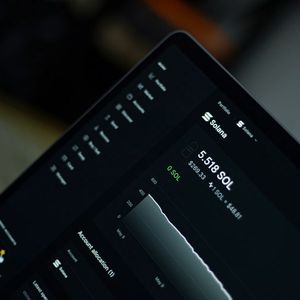
Market expert Umair Crypto has released an updated technical analysis on the Solana price from last week. In his new report, the analyst highlighted that Solana’s market structure still remains decisively bearish, especially after its recent crash to two-year lows. Despite the downtrend, Umair Crypto believes that Solana could still build enough momentum to reach higher levels. He has shared multiple bullish and a few bearish targets for the cryptocurrency, depending on its next price movements. Solana Price Faces Sharp Downtrend Amid Key Support Losses In his recent X post, Umair shared a chart analysis, predicting that the Solana price could recover and potentially climb back above $150. He provided detailed insights into the cryptocurrency’s recent downtrend and highlighted what a potential recovery might look like if the price breaks through key resistance levels. Related Reading: Polygon Hits $3.50 Billion In Payments As Crypto Activity Expands According to Umair, Solana’s price action turned sharply bearish after breaking key support levels and crashing below $80 earlier this week. The analyst noted that SOL lost the $100 Point Of Control (POC) from the January 2024 range. As a result, the price quickly dropped toward the next POC zone between $67 and $73. This decline represented a clean move downward of about 27%, highlighting how fragile higher price levels have become amid broader market weakness. Following the price drop, Umair reported that Solana staged a modest 12% bounce from the lower zone. This movement confirmed the area as a volume-heavy region capable of temporarily attracting buyers. Despite this, the chart still signals caution, as Solana is already pulling back while trading volume continues to increase. The analyst emphasized that the combination of rising volume and price declines typically indicates a downside conviction rather than a V-shape recovery setup. Consequently, it suggests that SOL’s decline could continue, making a quick price reversal unlikely. Path To Recovery And Higher Price Targets While the broader technical picture supports a bearish outlook for Solana, Umair Crypto still believes the cryptocurrency can stage a recovery to new highs, albeit slowly. He marked the former point of control near $100.93 as a key level to watch, noting that it now acts as a resistance. According to the analyst, the best-case scenario for Solana would be to build a base within its current range, flip its daily bullish structure, and use that structure as support for any future price recoveries. Without this, any sustained trend reversal is unlikely. Related Reading: Bitcoin Edges Past Gold In Appeal, JPMorgan Says If SOL breaks above the $100.93 level, Umair Crypto predicts the next price targets would be $120.59, $128.43, $138.77, and $150.36. In his original analysis, the analyst shared an even higher target, forecasting a surge to between $200 and $210 if Solana can maintain momentum above $150.36. Featured image from Unsplash, chart from TradingView
Memes still move markets, but timing decides winners. When charts flatten, and narratives recycle, fatigue sets in fast. Recent Bitcoin news highlights cautious positioning as traders wait for fresh catalysts. SPX6900 and Dogecoin remain widely held, yet upside feels diluted after repeated hype cycles. Large-cap meme coins now depend on renewed speculation instead of structural growth. That shift has triggered a quiet rotation. Attention is moving toward projects that offer defined entry points, visible progression, and participation before price discovery fully unfolds. That rotation explains the rising focus on APEMARS . Instead of chasing post-listing volatility, participants are positioning during presale stages with transparent mechanics. Structured pricing, scheduled progress, and visible community engagement create momentum earlier in the cycle. This approach reframes risk around timing rather than hype. As fatigue builds across established names, APEMARS captures attention as the best crypto to buy today. APEMARS ($APRZ): Why Early Momentum Matters for the Best Crypto to Buy Today APEMARS enters the spotlight as the best crypto to buy today by focusing on early participation rather than late speculation. The presale currently operates at Stage 7, priced at $0.00005576, with over $145,000 raised. More than 745 holders have secured over 6.1 billion tokens. This structure emphasizes steady adoption before listings. High-yield staking introduces long-term incentives, while predefined stage progression creates visible momentum. Instead of waiting for exchange liquidity, engagement forms earlier, building a conviction layer by layer. Momentum extends beyond pricing. APEMARS integrates a viral referral system designed to reward organic growth rather than paid hype. Participants unlock additional rewards through structured referrals, reinforcing network effects. The long-term roadmap includes scheduled token burns and ecosystem expansion, aligning scarcity with adoption. Earlier participants entered Stage 7 at $0.00005576, targeting a transparent listing price of $0.0055. That pricing gap reflects structure, not speculation, making early-stage momentum feel intentional rather than accidental. Turning $2,000 Into Early-Stage Positioning Power A $2,000 allocation at Stage 7 pricing of $0.00005576 secured approximately 35.8 million $APRZ tokens. With the intended listing price set at $0.0055, the modeled upside reflects the presale’s transparent structure. This scenario highlights timing advantages rather than guarantees. Stage progression increases pricing weekly, rewarding earlier access through lower entry levels. The focus remains on structured participation, where momentum builds gradually. Diamond hands pay off when conviction forms before volatility arrives. A Simple Path Into the APEMARS Presale Joining the APEMARS presale follows a straightforward process. Participants connect a compatible wallet and select a preferred payment method. Tokens are allocated instantly based on the active stage price. Staking options become available for long-term participants seeking yield. Referral features unlock additional incentives through verified engagement. Progression through stages is public, creating urgency without pressure. This design supports informed decisions while maintaining transparency throughout participation. SPX6900 ($SPX): Large-Cap Meme Stability Meets Slower Momentum SPX6900 remains a recognizable meme-driven asset with broad awareness. Its ecosystem benefits from liquidity depth and exchange accessibility. However, recent Bitcoin price today movements reveal slower speculative rotation into large-cap memes. SPX6900 now relies more on broader market sentiment than internal catalysts. That dynamic limits asymmetric upside during consolidation phases. Stability appeals to conservative positioning, but acceleration often requires renewed hype cycles. Feature-wise, SPX6900 maintains standard meme mechanics without significant structural innovation. Community engagement remains active, yet growth feels incremental rather than explosive. As Bitcoin news continues to influence risk appetite, SPX6900 mirrors broader sentiment rather than leading it. This places the token firmly in a late-cycle posture, attractive for exposure but less compelling for early-stage momentum seekers. Dogecoin ($DOGE): Cultural Icon Facing Diminishing Returns Dogecoin continues to dominate meme culture through brand recognition and widespread adoption. Its proof-of-work structure and broad exchange support provide resilience. However, upside potential narrows as market capitalization grows. Dogecoin’s price movements increasingly correlate with macro sentiment rather than internal development. References to Cardano price prediction or Cardano 2025 price often overshadow DOGE in forward-looking discussions. From a feature standpoint, Dogecoin emphasizes simplicity and community loyalty. That strength becomes a limitation during cycles seeking innovation. While DOGE remains relevant, traders searching for early-stage positioning often look elsewhere. Late-cycle assets depend on renewed speculation, whereas structured presales attract attention through clarity and defined progression. Conclusion Recent developments across SPX6900 and Dogecoin highlight late-cycle fatigue. Both assets remain relevant, yet upside relies heavily on renewed hype. As market participants assess positioning, the best crypto to buy today increasingly reflects timing advantages rather than brand familiarity. According to research compiled by best crypto to buy now , capital rotation often favors early-stage structures during consolidation phases. That perspective aligns with broader market behavior, including Bitcoin and alternative asset trends. APEMARS stands out through its presale performance and structured design. Stage-based pricing, visible progression, and upcoming burns support sustained momentum. Current ROI modeling from Stage 7 to listing reflects structure, not speculation. For informed participants, APEMARS offers early-stage exposure with defined mechanics. Exploration remains open while Stage 7 pricing windows still exist, reinforcing urgency through progression rather than promises. For More Information: Website: Visit the Official APEMARS Website Telegram: Join the APEMARS Telegram Channel Twitter: Follow APEMARS ON X (Formerly Twitter) Frequently Asked Questions For The Best Crypto to Buy Today What makes APEMARS different from large-cap meme coins? APEMARS focuses on early-stage participation through structured presale stages. Community engagement forms before listings, creating momentum earlier than large-cap meme coins that rely on post-listing speculation. Is APEMARS considered a next 1000x meme coin? APEMARS is positioned as an early-stage project with defined progression. While some view it as a next 1000x meme coin, outcomes depend on adoption, execution, and market conditions. How does the APEMARS presale pricing work? Pricing increases with each stage. Earlier stages offer lower entry prices, rewarding early participation. The intended listing price of $0.0055 creates a transparent pricing gap. Can tokens be staked during the presale? Yes, APEMARS includes high-yield staking options. These incentives encourage long-term holding and community participation throughout the presale and beyond. Where can reliable research on early-stage crypto projects be found? Many investors reference ranking platforms and research hubs such as thebestcryptotobuynow to compare early-stage opportunities alongside established assets. Glossary of Key Terms Presale Stage: A defined pricing phase before public listing Listing Price: Targeted initial exchange trading price Token Burn: Permanent removal of tokens from supply Staking: Locking tokens to earn rewards Liquidity: Ease of buying or selling an asset Market Cap: Total circulating value of a token Referral System: Incentive model for community-driven growth Summary This article explores the contrast between late-cycle fatigue in large-cap meme coins and early-stage momentum in structured presales. It highlights how SPX6900 and Dogecoin face diluted upside due to size and reliance on hype cycles. APEMARS emerges as an early-stage alternative, emphasizing transparent presale stages, defined pricing progression, staking incentives, and community-first growth. The narrative avoids claims of superiority, instead framing APEMARS as earlier in the cycle, which supports psychological conviction and legal clarity. With Stage 7 priced at $0.00005576 and a planned listing price of $0.0055, the presale structure rewards timing and participation. The article positions APEMARS as the best crypto to buy today for informed readers seeking early exposure. Disclaimer This content is for informational purposes only and does not constitute financial advice. Cryptocurrency investments involve risk. Readers should conduct independent research and consult professional advisors before participating in any digital asset opportunity. Disclaimer: This is a sponsored press release for informational purposes only. It does not reflect the views of Times Tabloid, nor is it intended to be used as legal, tax, investment, or financial advice. Times Tabloid is not responsible for any financial losses. The post Next 1000x Meme Coin Signal: APEMARS Stage 7 Tops Best Crypto to Buy Today With 9763% Upside While SHIB, FARTCOIN Lag appeared first on Times Tabloid .

Shiba Inu's exchange netflow has turned extremely bullish as the leading meme token sees returning interest from investors and its price makes a major comeback.