Crypto News
China, Japan, South Korea and ASEAN Agree to Set Up Working Group on Cross-Border Payments and Crypto Rules
Finance and central bank deputies from the ASEAN+3 group agreed in Kyoto to create a dedicated working group on linking payment systems and coordinating how they regulate digital assets.
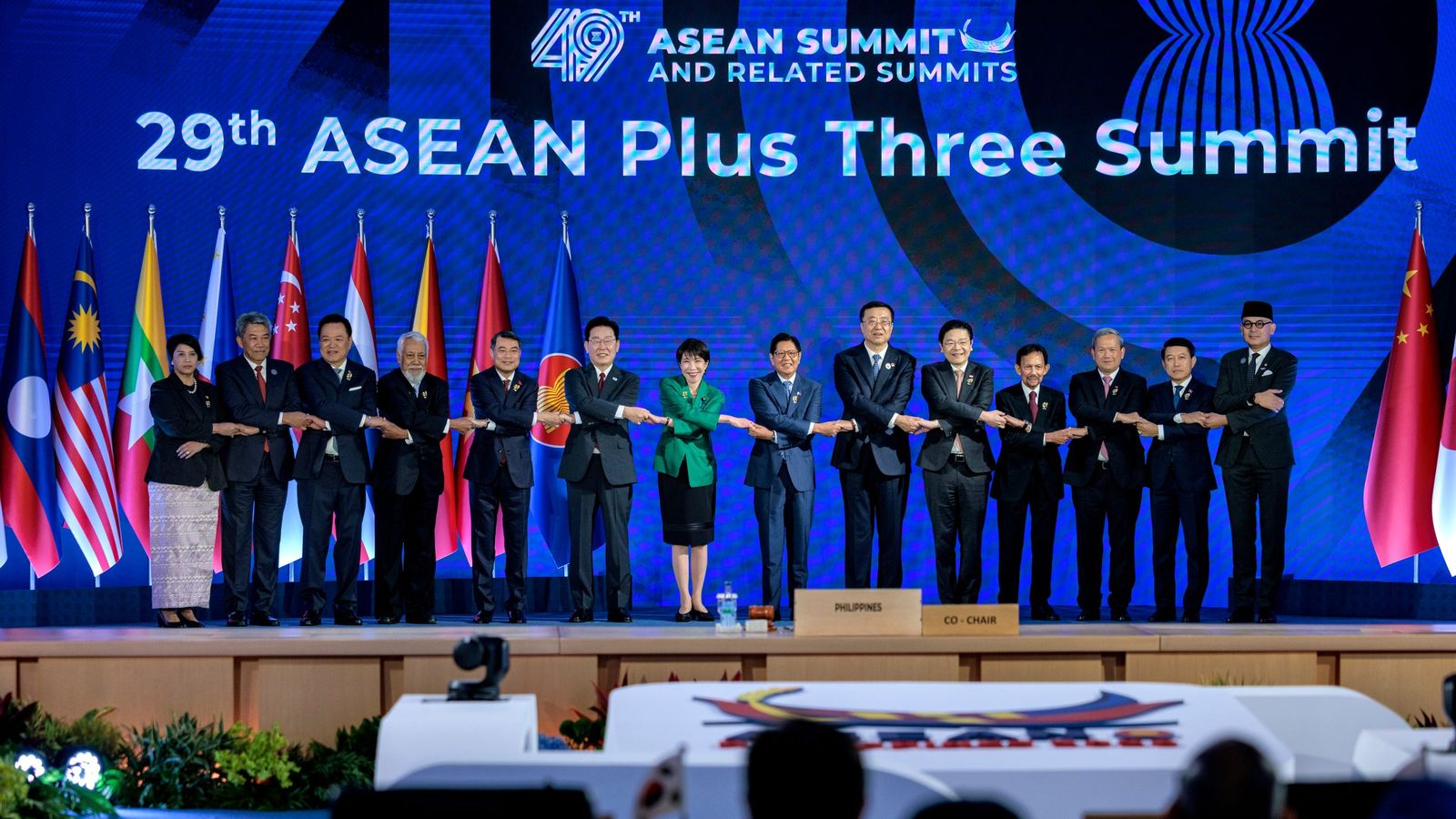
Fourteen Asian economies have taken a formal step toward working together on digital payments and crypto regulation.
At a meeting in Kyoto, Japan, on 25 and 26 November 2026, deputy finance ministers and central bank officials from the ASEAN+3 group agreed to set up a new program and a dedicated working group. ASEAN+3 brings together the 11 member countries of the Association of Southeast Asian Nations (ASEAN) plus China, Japan and South Korea.
What was agreed
According to the official co-chairs' statement published by Japan's Ministry of Finance, the deputies agreed to create the AMRO Cross-Border Digital Payments Program and a working group under it. AMRO is the region's economic research and surveillance office.
The group will hold policy talks on two areas
- Connecting retail and wholesale payment systems across borders, so that systems built for one country can work smoothly with others.
- Regulatory approaches to digital assets, meaning how each country treats crypto, stablecoins and similar products.
Reuters reported that the aim is to make payment systems that were mainly built for domestic use work across borders, as faster digital transactions become more popular.
How we got here
The Block reported that the idea came from a May 2026 ministers' meeting in Uzbekistan, where cross-border digital payments were named as a new area of cooperation. At that meeting, deputies were asked to find a way to deepen these discussions by the end of 2026. The Kyoto decision delivers on that request.
The Block also reported that an AMRO job post for a consultant suggests the work could study use cases such as person-to-person transfers, shop payments, tourism, e-commerce and remittances.
The results of the Kyoto meeting will be presented to ASEAN+3 finance ministers and central bank governors at their next meeting in Nagoya, Japan, in May 2027.
Reuters added that the deputies also noted a new emergency lending tool, which took effect this month, under the region's currency swap safety net known as the Chiang Mai Initiative.
Why it matters
This is not a new law, and it does not change any crypto rules today. It is a starting point for talks. But when large economies such as China, Japan and South Korea agree to coordinate on digital asset rules with Southeast Asia, it can shape how crypto, stablecoins and payment apps are treated across a big part of Asia.
For readers in Pakistan and India, the remittance angle is worth watching. Millions of South Asian workers send money home from countries in this region, such as Malaysia, Singapore and Japan. Faster and cheaper cross-border payment links, and clearer rules for stablecoins, could change how that money moves in the coming years.
It also shows a wider trend: governments in Asia are moving from "should we regulate crypto?" to "how do we regulate it together?" Clear, shared rules usually make it easier for serious companies to build, and harder for bad actors to hide between borders.
For now, the key date is May 2027, when ministers will review the first results.
Sources
- Japan Ministry of Finance Co-chairs' Statement of the ASEAN+3 Finance and Central Bank Deputies' Meeting, Kyoto, 26 November 2026
- Reuters (via Yahoo Finance) China, Japan, South Korea and ASEAN launch talks on digital payments across borders
- The Block China, Japan, South Korea and ASEAN to form working group on digital payments, crypto regulation
Share this article